Fear mongering, playing on our primal instinct to survive and dodge danger is a tactic long chosen by the clever advertisers. Biologically speaking, fear produces epinephrine in our brain, the "feel-good" -hormone that rewards us for experiencing frightening situations. (Horror movies, anyone?) That is why we get pleasure out of being scared, and the sensation is both contagious and addictive. Fear also overtakes reason in our thinking, and there is nothing more powerful of a persuader than a crippling sense of danger. And this is how we make a lot of our purchases. Really. Let´s see some toothbrush images.
Feeling those gums going tender? A slice of horror in a commercial. But this is nothing new. Let´s have a look at the olden goldies.
That dust sure is a monster. Because we just cannot be clean enough, every gal needs a dose of radioactivity!
Fear of failure, or how they say "feared self", is the engine driving most of the marketing of cosmetics.
Anti-wrinkle creams, soaps, teeth whitening strips, line-control eye balms... Do we really need them, or do they even work? Or are we actually resorting to the "aid" offered to us because we _fear_ what might happen otherwise? L´Oreal states that "I am worth it", but am I worth more that gasping every single tube and case they are pushing as a boost for self-esteem? Like it or not, the message is that we are simply not acceptable without the chemicals on our skin. Be it radioactivity, DDT or parabens.
Unilever´s "Dove" -products gained a lot of good PR with their message of "real" beauty and decision to use "real" women on their advertising. This was, however, another case of smoke and mirrors. Pascal Dangin , the magician of a photoshopper, came forward to admit that "a lot" of photoshopping was needed and performed on the raw images of "real beauties".
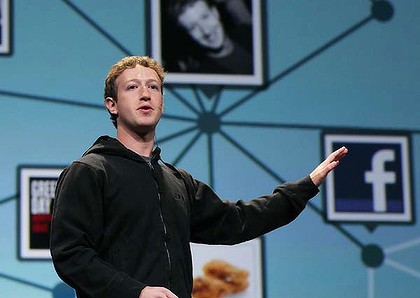
For those of you not yet alarmed by the growing problems of the big blue beast, here is one more interesting add on -feature interfering your social enjoyment: Facebook is planning to integrate shameless advertising into your Friend Feed. Yes, in the middle of your lifeline. In other words, if you think you can escape and ignore those agonizing ad slogans on the side, think again. Think of tacky Viagra ads popping up in the middle of ogling at your friends whereabouts. And there will be no way to hide those pesky lines. Yes, a mass of people will probably object. But will they abandon ship?
With over 750 million users and growing, the chances are good old Zuckie just simply doesn´t care what we think. Why should he? At this point, the beast of a company is mainly interested in generating income, in masses. We, the people, are commodity being sold to the advertisers. This is nothing new, it is how most of the privately-owned media works. But has Facebook grown to be something more than just a medium? A virtual living room consisting of our social life, private information, desires, loves and hates? If you change your status into single, would you object to condom ads popping up in your feed? Heck, they already introduced the idea of announcing your unborn child, so what is off-limits anymore?
E.B. Boyd from Fast Company already announced Facebook´s new partnership with the Nielsen company in creating an Online Campaign Ratings -system, which basically observes the demographic data behind ad usage within the network. Who is viewing and what; much like what Nielsen has done so far with measuring television use. This is clearly just the start.
One might say that ads aren´t cool, but then again, is Facebook cool anymore? Has the fickle aura of hipness shifted and traveled over the rainbow somewhere like the Google+circles? What do you think?
Facebook pushing advertising into Your Friend Feed
The old days of moviemaking, when a simple Coke-can might give us a quick innocent flash on the sidelines of the overall story (semi-accidentally) are long gone. These days it is all about the business and cross-promotion.
In "The Social Network" all the computers were conveniently old-school Sony-apparatuses, to boost the sales of the parent company producing the Facebook-epic. The two "Sex and the City" movies were blatant advertising towards females from beginning to end, much like the tv-series they were based on. "Cast away" was nothing but a long commercial (for which we moviegoers paid!) defending the glory of Fed-ex."Up in the Air", while still having some artistic value, was basically showing us how cool "American Airlines" is- look, even George Clooney likes to travel with it! In the eyes of the mass public, there is no difference between an actor and his/her character. We buy for a multitude of reasons, and a lot of the choices are anything but rational. Or so they say. They, you might ask?
These days, when actual commercials are easy to miss with TIVO, illegal torrents and just plain growing resistance to direct messages, the (M)ad Men have gotten ever more creative. Believe it or not, there are actual people making a living planning all those wicked marketing moves to be shown on film. Sometimes it is grotesque and obvious, often so subtle and fast that you might blink and miss it. But images are never unintentional. The idea is to plant a seed, make the viewer desire the product and not even realize what hit her/him. At the moment this beast of a business is valued at $ 3 billion.
One of the professionals in the mind game business of today is Norm Marshall, whose official title is "entertainment marketing consultant". Former car salesman has made a living arranging fertile unions between brands and Hollywood, and sees no harm in what he does. But even Marshall admits that there has to be a balance between the creative forces and the marketing forces: "otherwise it is just one big commercial". He himself only watches period movies anymore, due to boredom with contemporary flicks and their constant ads.
And how does this get us to the "Man with a licence to kill"? The production of the next earth-shaking spy thriller was almost halted due to difficulties in arranging financing. But alas, a few calls to quite a few companies, and the budget is back in order. So much so, that practically a third of the overall budget of the next James Bond- classic is coming from product placement. In total that makes a nice $45 million dollars, and with that kind of money, we are sure to see brands names from beginning to end. If you want to pass them, you might as well pass the entire action adventure.
Morgan Spurlock, the ever-curious American filmmaker on the loose, has naturally chosen this sexy topic for his new documentary, "POM Wonderful presents: The Greatest Movie ever sold". In his customary satirical way, he exposes the modus operandi behind the entire business, and manages to sell some visible space in his own film, as well. All in all, he has about 20 brands sponsoring his cultural critique, making one question what his overall goal is in the first place. According to Spurlock, even the first short clips of film were filled with advertisements: Thomas Edison shot the famous train scenes with ads plastered on the sides of the train. Spurlock´s intent is good, yet his idea seems to lack teeth on the actual agenda. These days, the few glimpses of a Coke-can or a brand name cigarette are increasingly being upgraded with actual script inserts, making movies (or tv-shows) seem like occasional, well, plain commercials.(Fast-rewind to previous example on "Cast Away"). Problem does not lie with marketing itself: nowadays it is hard to walk through a street without being offered something. The issue lies within ourselves as a society, and our increasing acceptance to become targets for messages masquerading as innocent cultural texts. Or, does it all really matter? Are we consumers above all else?
Even the genius auteur himself, Mr. David Lynch, is not immune to the allures of commercialism. Besides making brilliant and mind-boggling art films every now and then, he has also ventured into the world of commercials. Perfume, pregnancy tests, cars, game consoles, antacids... Lynch is first to admit he does these for money and access to latest technology. But product placement for him putrefies.
James Bond, Product placement and the not-so innocent Quickie
Shockingly, these disturbing images were once considered acceptable mainstream advertising. Oh, the nostalgia.
I can´t wait to see what happens 50 years from now; will I look at those pesky Axe/Lynx men´s deodorant ads with a fresh eye? At first one might be appalled at looking at these old pictures, but then again... I´m amused. The reality, in which we live today in the Western countries, is quite far from the "Happy Days" -era pictured below. Woman´s space within the society has greatly expanded from the pigeonhole of wife-mother-whore -dimension, and as a female myself, I am truly glad over that development. Then again, let´s not forget that it is 2011, and yet in Saudi-Arabia women still have to fight over the right to vote. Or to be even recognized for being born in the first place.
The Good Old Days of Advertising: Or, is it always illegal to kill a woman?
It is amazing the stuff they can sell with women´s bodies. Even now. Here´s an ad from "The Saturday Evening Post" from the golden fifties. This was the age of rising consumerism, belief on a never ending supply of energy, resources and constant economic growth. Women were curvier, blonder and well, "domesticated". At least according to the image this commercial portrays. She seems to be having an orgasm from the simple pleasure of having her breasts being watered by a random strange man. (Seriously, how can that happen? Do you know how cold that hosed down water usually is?) Hmm, I have a feeling this whole picture could be just a metaphor for something quite else going on between a man and a woman. I might be wrong. But the illustrator must have/had some imagination going on in that head of his.
Her hair, makeup and the entire outfit look high maintenance. Yet she does not mind it all being ruined by a splash of water. Because she doesn´t care! Everyone wants to win the Miss wet t-shirt contest, orchestrated by a man in a lab coat -all in the name of science. The things we just have to do, or what, ladies?
And this ad was brought to you by the Continental Oil Company, defunct company since 2002.
The purpose of Twitter has long been somewhat of a cloudy issue for the celebrities. Passing info of the latest news in your celebrity shenanigans-true. Enlightening us of your existence and gathering followers -true. (Some might say collecting as many followers as possible is the only goal of Twitter, see Ashton Kutcher)
Sponsorship, or plain old advertising has creeped its way into this social networking medium as well.
The latest revelation is the actual amounts. Would you promote for 58 bucks as Tony Mandarich does?
Khloe Kardashian (reality-pseudostar and wife to a famous athlete) 2941.25 dollars (per tweet)
Ryan Sheckler (MTV-reality waste, skateboarding athlete) can be negotiated Lindsay Lohan (sad case in rehab) 2985.80 dollars (per tweet) Audrina Patridge (dancer and actress in training) 1117.68 dollars (per tweet) Heidi Montag (blonde singer) 3529.50 dollars (per tweet) Spencer Pratt (actor) 2941.25 dollars (per tweet) Holly Madison (Hugh Hefner´s ex-bunny) 4000 dollars (per tweet) Ian Somerhalder (actor) 941.20 dollars (per tweet) Nina Dobrew (actress) 417.66 dollars (per tweet) Tom Welton (actor) 2353 dollars (per tweet) Apolo Ohno (olympic athlete) 235.36 dollars (per tweet) JuicyStar007 (Youtube beauty guru) 455 dollars (per tweet) Kelis (singer) 1764.75 dollars (per tweet) Lisa Rinna (actress and all-around dancer) 780 dollars (per tweet) Marlee Mathlin (Oscar-winning actress) 217.65 dollars
PaPaRoach (rockband) 1176.50 dollars Soleil Moon Frye (actress) 5850 dollars
(info from "Sponsored Tweets"") This is just a tip of the iceberg, in reality almost all of the known names on Twitter most likely get compensated for mentioning anything. Like we did not know?
Interestingly Ms Montag makes more than her spouse.
Were you surprised of this organized advertising?
The Mad Men -craze got me late, in fact almost 3.5 seasons late. I blame it all on the ad pictures and short clips shown from this fabulous show, where practically always someone is smoking, drinking or both.
It gave an impression of the show of a virtual 1-hour commercial for the alcohol-and tobacco industry.
Now that I have gone through all but the fourth and latest season, I must admit that the show is good on its own. The writing is good, actors are smart, and one clear, essential idea of what makes art brilliant shows through. Namely, it is better to "show, not tell". Simple, yet so difficult to demonstrate and do well.
However, the use of less-than-healthy substances is heavy and visible in all the episodes. Especially during the first season, which seems to move on through a thick layer of smoke and echoes of alcohol reeks. I get it, this is supposed to be the sixties, when men were drinking at the office before noon, and your doctor was smoking while seeing patients. However, the internationally known brands are namedropped so often, that it makes me believe this is not just set design. Product placement? Of course. For these companies this show is golden. The crew probably gets free cigars and Jack D. sent to their dressing rooms as thanks for a job well done. I am not joking. This is how the machinery works.
Mad Men Warning: Smoking is Hazardous to Your Health